


The Backbone of Efficient Movement: What is Rail Logistics?
- Feb 22, 2024
- 5 min read
Updated: May 14, 2025
Rail transport is especially effective for moving bulk commodities like coal, minerals, and agricultural products. It provides a cost-effective, eco-friendly alternative to road transport, with the added benefit of reducing highway congestion and lowering emissions. By moving goods via rail, businesses can transport large volumes more efficiently, lowering overall costs and minimizing environmental impact.

What is Rail Logistics?
In the world of logistics, rail transport is a powerhouse that often operates behind the scenes. Rail accounts for roughly 40% of U.S. freight volume, moving goods more efficiently than any other land-based mode. Globally, rail is responsible for transporting millions of tons of bulk commodities like coal, minerals, and agricultural products each year. Its cost-effectiveness and eco-friendly nature make it a smart alternative to road transport, helping to ease highway congestion and reduce greenhouse gas emissions by up to 75% compared to trucks. Rail logistics isn’t just efficient—it’s essential.
AI Auto Summary
AI Auto Summary: The Backbone of Efficient Movement: Rail Logistics
Overview: Rail logistics is a cornerstone of global freight movement, excelling in cost-effective, eco-friendly, and efficient transportation of bulk goods. It serves as a vital link in supply chains, offering seamless intermodal connectivity and supporting industries ranging from agriculture to automotive.
Key Highlights:
Primary Advantages:
Cost Efficiency: Lower transportation costs for bulk shipments over long distances.
Sustainability: Rail reduces emissions by up to 75% compared to trucks.
High Load Capacity: Handles large volumes of commodities like coal, minerals, and grains.
Intermodal Connectivity: Facilitates smooth transitions between rail, trucks, and ships.
Common Applications:
Bulk commodities (coal, grains, chemicals).
Automotive transport.
Intermodal freight for e-commerce and retail sectors.
Challenges:
Aging infrastructure leading to bottlenecks.
Vulnerability to weather disruptions.
Labor shortages and competition from other freight modes.
Technological Advancements:
Predictive Maintenance: Sensors enhance efficiency and minimize downtime.
AI & IoT: Optimize routes and monitor cargo conditions in real-time.
Blockchain: Improves transparency and automates transactions.
Electrification: Electric locomotives powered by renewable energy reduce environmental impact.
Opportunities:
Growing demand for bulk transport.
Expansion of inland ports for better regional connectivity.
Public-private partnerships driving modernization and sustainability.
Comparative Analysis:
Rail vs. Road: More efficient for bulk freight over long distances but less flexible for last-mile delivery.
Rail vs. Air: Cheaper and eco-friendlier but slower.
Rail vs. Sea: Complements maritime transport by connecting ports to inland regions.
Conclusion:
Rail logistics is indispensable for modern supply chains, blending efficiency with sustainability. By leveraging advancements like AI, IoT, and electrification, businesses can optimize freight movement, reduce costs, and align with eco-friendly goals. As the backbone of freight, rail logistics ensures seamless operations in a rapidly evolving world.
The Power of Rail Logistics: A Backbone of Modern Freight
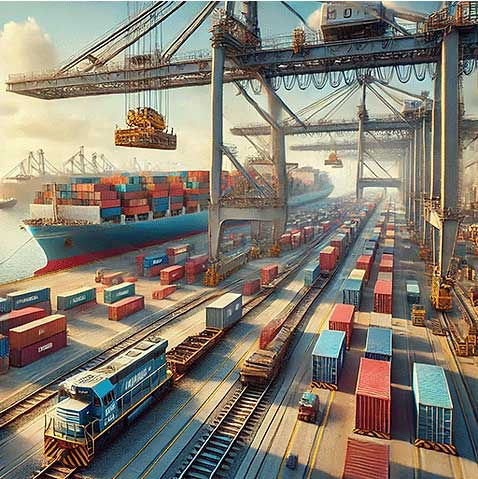
Rail logistics plays a vital role in moving goods across vast distances, earning its place as the backbone of global supply chains. Beyond its ability to transport massive volumes, rail logistics excels in intermodal transport—a system where goods seamlessly transition between rail, trucks, and ships. This capability allows for greater flexibility, higher load capacity through container stacking, and reduced handling time, ensuring smoother operations across multiple transport modes.
Most Common Uses of Rail Logistics
Rail logistics supports a wide range of industries and needs. Here are some of its most common applications:
Bulk Commodities: Transporting large quantities of coal, minerals, grains, and other raw materials efficiently over long distances.
Intermodal Transport: Moving containerized goods seamlessly between rail, trucks, and ships, enhancing flexibility and reducing handling time.
Automotive Industry: Shipping vehicles and automotive parts across regions, often using specialized railcars designed for this purpose.
Chemical and Petroleum Products: Safely transporting hazardous materials like chemicals and fuels, benefiting from rail’s controlled access and safety features.
Consumer Goods: Supporting e-commerce and retail by moving large quantities of goods to regional distribution centers.
These diverse uses highlight rail’s adaptability and importance in meeting the logistical needs of a wide range of industries.
What are Current Challenges in Rail Logistics?
While rail logistics offers numerous advantages, it faces challenges that must be addressed to unlock its full potential:
Aging Infrastructure: Many rail networks rely on outdated infrastructure, creating bottlenecks and delays. The cost of upgrading tracks and terminals often deters investment.
Intermodal Integration Gaps: Seamless transitions between rail and other transport modes are often hindered by mismatched standards and inefficiencies at transfer points.
Weather Vulnerability: Extreme weather conditions like floods and snowstorms can disrupt operations, causing delays or damage.
Labor Shortages: The industry struggles to attract skilled workers, from engineers to maintenance crews, as retirements outpace new entrants.
Competition from Other Modes: While rail is cost-effective for long hauls, road transport’s flexibility and air freight’s speed can edge it out for specific cargo needs.
Opportunities in Rail Logistics
Despite these challenges, rail logistics is evolving, driven by innovation and growing demand:
Modernization Projects: Investments in electrified lines, double-stacked tracks, and expanded terminals promise to enhance capacity and reduce costs.
Sustainability Advantages: Rail’s lower carbon footprint positions it as a critical solution for companies aiming to meet emission reduction goals.
Tech-Driven Efficiency: Technologies like AI, IoT, and predictive maintenance optimize operations, prevent delays, and improve safety.
Rising Demand for Bulk Transport: As supply chains expand, rail’s ability to move high-volume commodities remains unmatched.
Inland Port Growth: The development of inland ports relies on rail to connect remote regions with global trade networks efficiently.
Public-Private Partnerships: Collaboration between governments and businesses is driving infrastructure upgrades, balancing economic growth with sustainability.
Technological Advancements in Rail Logistics
Recent innovations are transforming rail logistics into a high-tech, sustainable solution:
GPS Tracking and Real-Time Monitoring: These tools provide real-time visibility, enabling operators to optimize routes and resolve issues proactively.
Predictive Maintenance: Sensors track wear and tear, reducing downtime and extending the life of railcars and infrastructure.
Autonomous Rail Systems: Autonomous trains improve fuel efficiency, reduce human error, and streamline operations.
Blockchain: By securing cargo data and automating transactions, blockchain enhances transparency and speeds up processes.
AI and IoT: AI optimizes routes, while IoT sensors monitor cargo conditions and track infrastructure in real time.
Electrification and Renewable Energy: Electric locomotives powered by renewable energy sources are reducing emissions, making rail a leader in green logistics.
Key Roles of Rail in Logistics
Bulk Cargo Movement: Rail handles large quantities of commodities efficiently, supporting industries dependent on economies of scale.
Intermodal Connectivity: It integrates seamlessly with other modes, reducing handling time and enhancing overall supply chain performance.
Sustainability: Rail emits far fewer greenhouse gases than road or air transport, supporting eco-friendly freight strategies.
Cost Efficiency: Its high load capacity and scalability make rail ideal for long-distance, cost-effective shipping.
Comparing Rail to Other Freight Methods
Road Transport: Flexible for last-mile deliveries but less efficient for bulk goods over long distances.
Air Transport: Faster but far more expensive and less eco-friendly.
Sea Transport: Rail complements sea freight by connecting ports to inland regions, ensuring smooth transitions.
Advantages of Rail Transport
Cost Savings: Rail moves large volumes at lower costs, ideal for long hauls.
Reduced Traffic Congestion: Rail keeps goods off busy highways, ensuring timely deliveries.
Environmental Benefits: Rail’s lower emissions make it a sustainable choice.
High Load Capacity: It optimizes bulk cargo movement.
Security and Safety: Controlled access reduces theft and damage risks.
Conclusion
Rail logistics is more than a mode of transport—it’s a critical driver of global commerce and sustainability. From moving bulk goods efficiently to pioneering eco-friendly innovations, rail continues to be an indispensable piece of the logistics puzzle. As businesses adapt to the demands of modern supply chains, they should consider how rail logistics can enhance their efficiency, cut costs, and align with sustainability goals. Let’s ensure this backbone of freight continues to power progress in a rapidly evolving world.


